
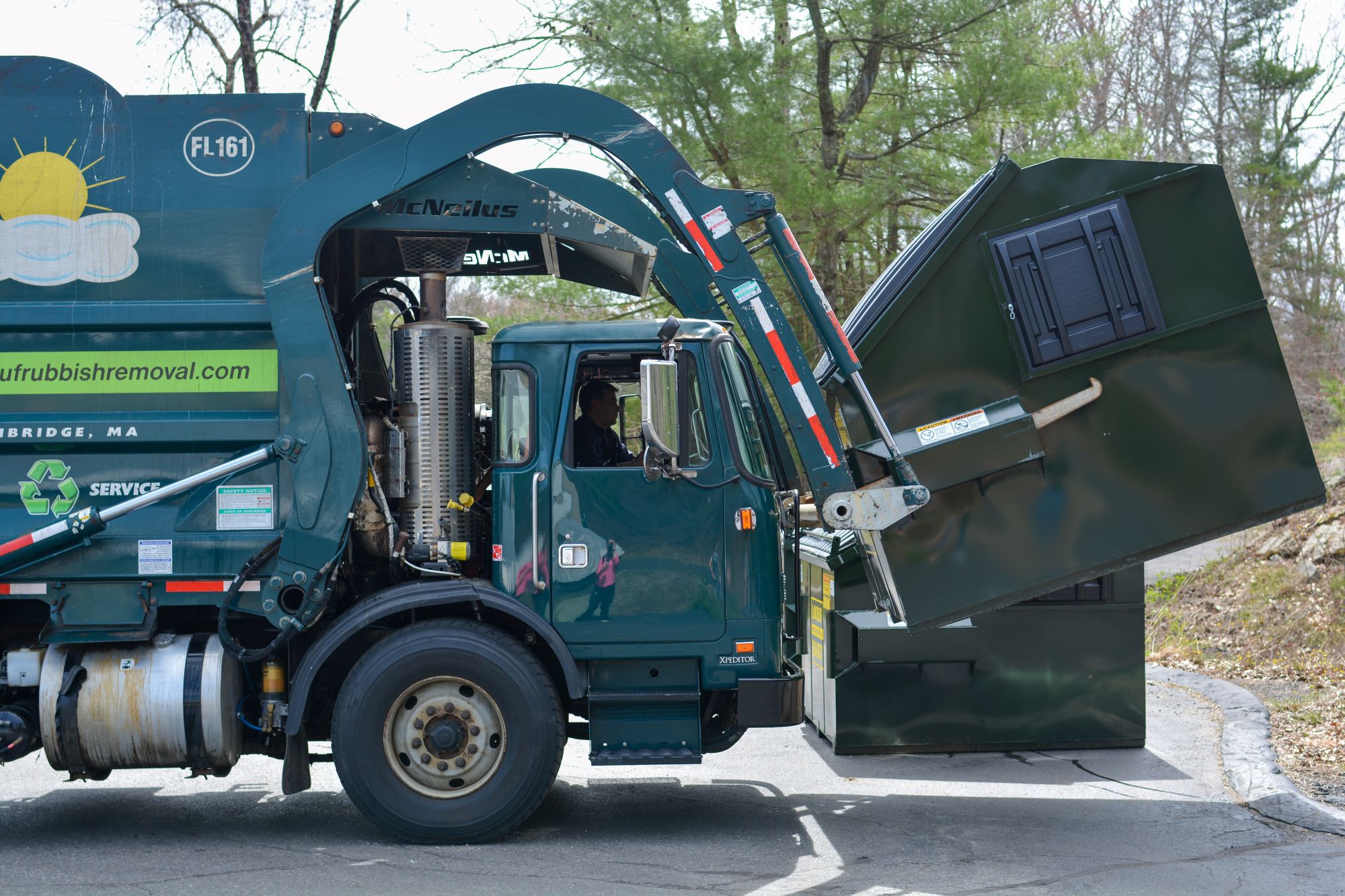
Garbage trucks play a crucial role in keeping our communities clean by efficiently collecting and disposing of waste. One of the key tasks these trucks perform is lifting dumpsters to empty their contents into the truck’s hopper. This process involves specialized mechanisms designed to handle heavy loads safely and quickly. In this article, we’ll explore how garbage trucks lift dumpsters, focusing on three main components: front-load lift bars, fork pockets, and hydraulic arms.
Front-Load Lift Bars
Front-load lift bars are a common feature on front-loading garbage trucks. These bars are sturdy metal arms located at the front of the truck. When the truck approaches a dumpster, the operator aligns the lift bars with the lifting points on the dumpster. The bars then hook onto the dumpster’s lifting lugs or slots.
Once secured, the lift bars raise the dumpster vertically using a hydraulic system. This lifting action tilts the dumpster over the truck’s hopper, allowing the waste to be dumped inside. After emptying, the bars lower the dumpster back to the ground gently. Front-load lift bars are designed for quick and efficient operation, making them ideal for commercial and industrial waste collection.
Fork Pockets
Fork pockets are another essential feature found on many garbage trucks, especially those designed to handle standardized front load plastic dumpsters. These pockets are openings or slots located on the sides or front of the truck’s lifting mechanism.
The forks of the truck’s lifting arms slide into these pockets, providing a secure grip on the dumpster. This design ensures stability during lifting and dumping, reducing the risk of spills or accidents. Fork pockets are particularly useful for handling large dumpsters that have reinforced edges or frames designed to fit into these slots.
By engaging with fork pockets, garbage trucks can lift heavier loads more safely and maintain better control throughout the dumping process.
Hydraulic Arms
Hydraulic arms are the powerhouse behind most modern garbage truck lifting systems. These arms use hydraulic cylinders powered by pressurized fluid to generate strong lifting force.
When activated, hydraulic arms extend and retract smoothly, allowing precise control over the dumpster’s movement. They work in tandem with front-load lift bars or fork pockets to raise and tilt dumpsters efficiently.
Hydraulic systems provide several advantages: they offer high lifting capacity, smooth operation, and reliable performance even under heavy loads. Additionally, hydraulic arms can be controlled remotely by the truck operator, enabling quick adjustments during collection routes.
In summary, garbage trucks rely on a combination of front-load lift bars, fork pockets, and hydraulic arms to lift dumpsters safely and efficiently. These components work together seamlessly to ensure that waste collection is both effective and reliable, helping keep our neighborhoods clean with minimal disruption. For a large variety of frontload and rearload plastic dumpsters check out Bearicuda’s collection of plastic dumpsters.