
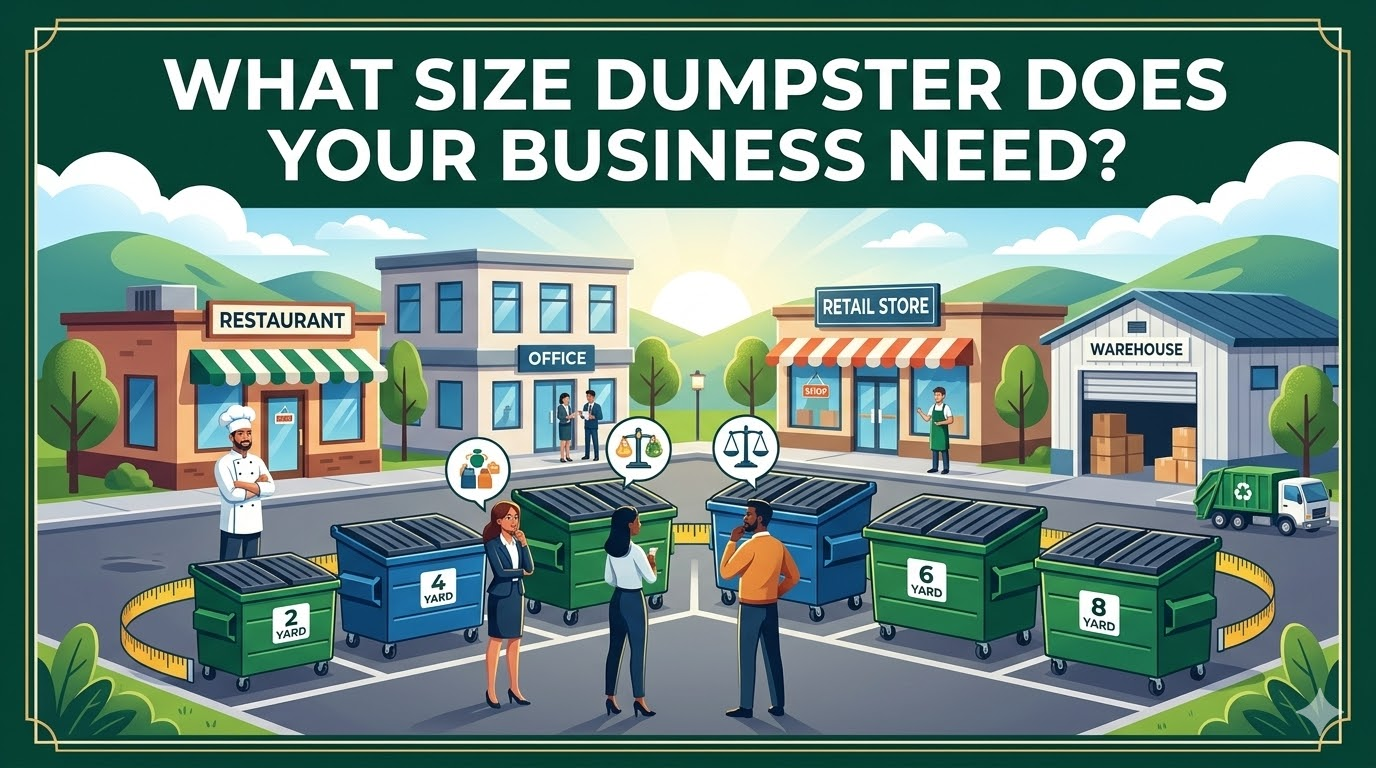
Choosing the right dumpster size is crucial for efficient waste management in any business. Selecting a dumpster that’s too small can lead to overflow and frequent pickups, while one that’s too large may cost more than necessary. Let’s explore the ideal dumpster sizes for various types of businesses to help you make an informed decision.
Restaurants generate a significant amount of organic waste, packaging materials, and recyclables daily. Typically, a 2 to 4-yard dumpster works well for small to medium-sized eateries. Larger establishments or those with high customer turnover might require a 6 to 8-yard dumpster to handle food waste and cardboard efficiently. Regular pickups are essential to maintain hygiene and prevent odors.
Apartment complexes produce a steady stream of household waste, including bulky items like furniture or appliances occasionally. For smaller complexes, a 4-yard dumpster might suffice, but larger properties often need 6 to 10-yard dumpsters. Multiple dumpsters or compactors may be necessary for very large communities to keep waste management smooth and residents happy.
Schools generate mixed waste—from cafeteria leftovers to paper and packaging. A 4 to 6-yard dumpster is usually adequate for elementary or middle schools, while high schools or campuses with multiple buildings might require 8 to 10-yard dumpsters. Recycling bins alongside dumpsters can help manage paper and plastic waste effectively.
Retail stores deal with packaging materials, damaged goods, and general trash. Smaller shops often find a 2 to 4-yard dumpster sufficient, while larger retail outlets or malls may need 6 to 8-yard dumpsters. Efficient waste disposal helps maintain a clean shopping environment and supports sustainability efforts.
Similar to retail, stores vary widely in size and waste output. Specialty stores or boutiques typically manage well with a 2-yard dumpster, whereas grocery stores or big-box retailers benefit from 6 to 10-yard dumpsters due to higher volumes of cardboard and organic waste. Scheduling pickups during off-hours minimizes disruption.
Campgrounds face unique challenges with seasonal fluctuations and diverse waste types, including food scraps, packaging, and sometimes hazardous materials like batteries. A 6 to 10-yard dumpster is generally recommended, with flexibility for additional containers during peak seasons. Proper placement and regular servicing ensure cleanliness and visitor satisfaction.
Selecting the right dumpster size tailored to your business type not only optimizes costs but also promotes a cleaner, safer environment. If you’re unsure about your specific needs, consulting with a waste management professional can provide personalized recommendations.