
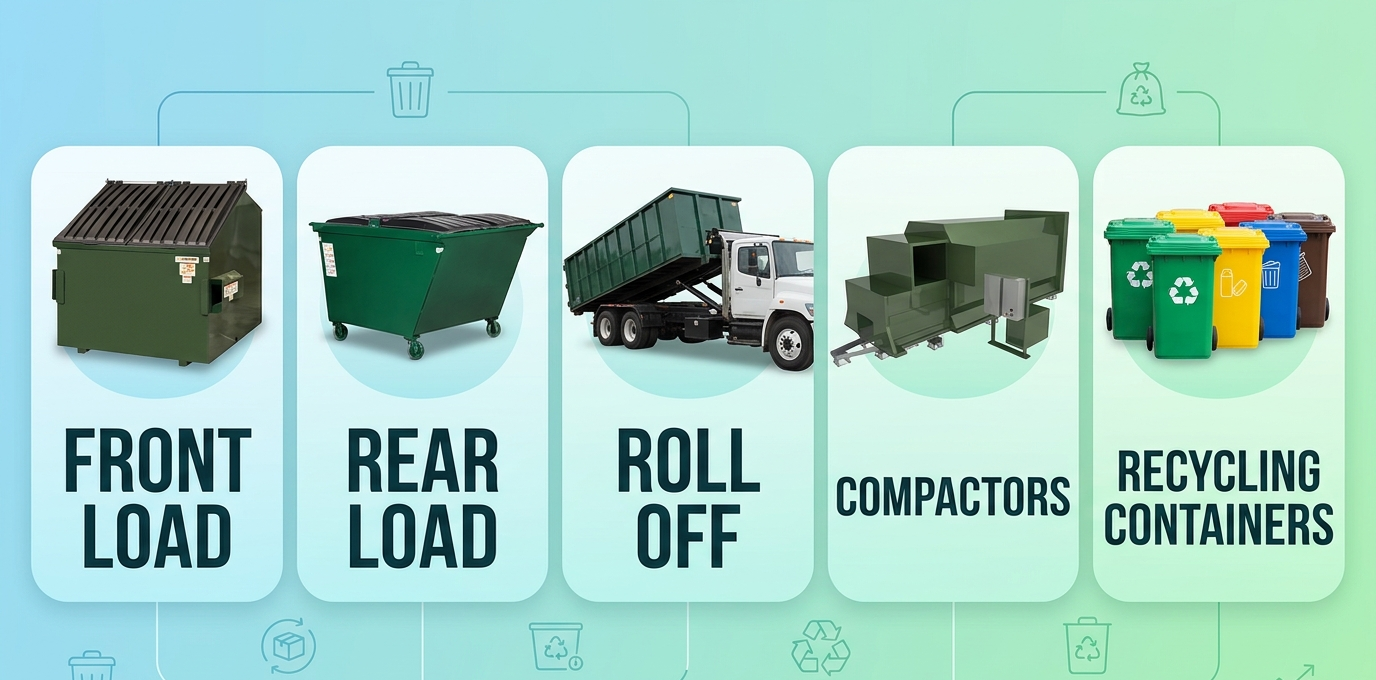
When it comes to managing waste efficiently, choosing the right type of commercial dumpster is crucial. Whether you’re running a construction site, a retail store, or an office complex, understanding the different dumpster options can help streamline your waste disposal process and even save costs. Let’s dive into the most common types of commercial dumpsters and what makes each one unique.
Front Load Dumpsters
Front load dumpsters are among the most popular choices for businesses like restaurants, retail stores, and apartment complexes. These dumpsters are designed to be emptied by front-loading garbage trucks equipped with hydraulic arms. The truck lifts the dumpster from the front, empties it, and places it back down.
Key Features:
- Typically available in sizes ranging from 2 to 8 cubic yards.
- Ideal for daily or weekly waste collection.
- Easy to access with a front lid for quick disposal.
- Front load dumpsters are perfect for businesses that generate moderate amounts of waste and need regular pickups.
Rear Load Dumpsters
Rear load dumpsters are similar to front load dumpsters but are emptied from the rear. Garbage trucks back up to these dumpsters and lift them using rear arms.
Key Features:
- Usually smaller than front load dumpsters, often 2 to 4 cubic yards.
- Commonly used by small businesses or in areas with limited space.
- Often have lids that open from the top or side.
- These dumpsters are great for businesses with less frequent waste disposal needs or tighter spaces where front loading isn’t feasible.
Roll Off Dumpsters
Roll off dumpsters are large, open-top containers that are delivered to your site and picked up when full. They’re commonly used in construction, demolition, and large-scale cleanouts.
Key Features:
- Sizes range widely, typically from 10 to 40 cubic yards.
- Delivered on a flatbed truck and rolled off at your location.
- Open top design allows for easy disposal of bulky items.
- If your business generates large volumes of waste or heavy debris, roll off dumpsters offer flexibility and capacity that other types can’t match.
Compactors
Compactors are specialized dumpsters equipped with a mechanical system that compresses waste, reducing its volume significantly. They’re ideal for businesses producing large amounts of trash daily.
Key Features:
- Can reduce waste volume by up to 80%.
- Available in stationary or self-contained models.
- Helps lower hauling frequency and disposal costs.
- Using compactors is a smart choice for high-waste environments like supermarkets, manufacturing plants, or large office buildings aiming to optimize space and reduce expenses.
Recycling Containers
Recycling containers are designed specifically for collecting recyclable materials such as paper, plastics, glass, and metals. Many businesses use these alongside regular dumpsters to promote sustainability.
Key Features:
- Often color-coded or labeled for easy sorting.
- Available in various sizes depending on recycling volume.
- Supports environmental initiatives and compliance with local regulations.
- Incorporating recycling containers into your waste management strategy not only benefits the environment but can also enhance your company’s public image.
Choosing the right commercial dumpster depends on your business’s specific needs, waste volume, and space constraints. By understanding these types—front load, rear load, roll off, compactors, and recycling containers—you can make informed decisions that improve efficiency and support sustainability goals.