
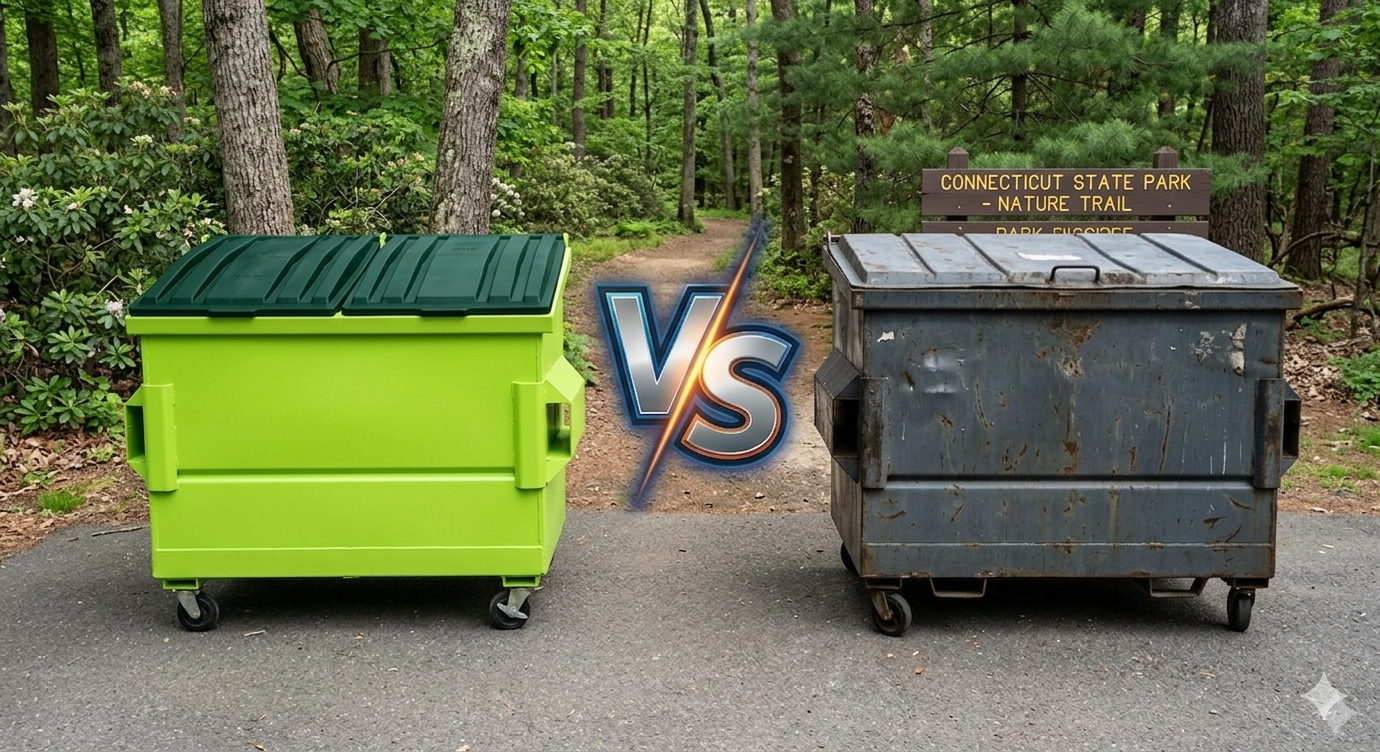
When it comes to choosing the right dumpster for your waste management needs, the decision often boils down to two popular materials: plastic and steel. Both have their unique advantages and drawbacks, making it essential to understand how they compare in key areas like durability, cost, weight, and corrosion resistance. Let’s dive in and explore which option might be better suited for your specific requirements.
Steel dumpsters are renowned for their exceptional strength and toughness. They can withstand heavy loads, rough handling, and harsh environments without easily denting or breaking. This makes steel dumpsters ideal for construction sites, industrial use, and other demanding applications where durability is paramount.
Plastic dumpsters, on the other hand, are made from high-density polyethylene (HDPE) or similar materials that offer good impact resistance but generally aren’t as tough as steel. While plastic dumpsters can handle everyday waste disposal tasks effectively, they may not hold up as well under extreme stress or heavy-duty use.
When it comes to upfront costs, plastic dumpsters typically come out ahead. They are generally less expensive to manufacture and purchase compared to steel dumpsters. This makes plastic an attractive option for businesses or individuals looking for a budget-friendly solution.
However, it’s important to consider long-term costs as well. Steel dumpsters may require occasional maintenance like repainting or rust treatment but tend to have a longer lifespan. Plastic dumpsters might need replacement sooner if exposed to harsh conditions frequently, potentially increasing overall expenses over time.
Weight is a crucial factor, especially when it comes to transportation and ease of handling. Plastic dumpsters are significantly lighter than their steel counterparts, making them easier to move around and reducing fuel consumption during transport.
Steel dumpsters are heavier due to the density of the material, which can make them more challenging to maneuver but also contributes to their stability when placed in windy or uneven environments.
One of the standout benefits of plastic dumpsters is their excellent resistance to corrosion. Unlike steel, plastic does not rust or degrade when exposed to moisture, chemicals, or salt. This makes plastic dumpsters particularly suitable for wet or coastal environments where corrosion is a major concern.
Steel dumpsters require protective coatings such as paint or galvanization to prevent rusting. Even with these treatments, over time steel can corrode if exposed to harsh elements without proper maintenance.
Choosing between plastic and steel dumpsters ultimately depends on your specific needs and priorities. If you require maximum durability and strength for heavy-duty use, steel dumpsters are likely the better choice. However, if you’re looking for a lightweight, cost-effective option with excellent corrosion resistance, plastic dumpsters may be the way to go.
By weighing factors like durability, cost, weight, and corrosion resistance carefully, you can select the dumpster that best fits your project and budget—making waste management simpler and more efficient! If you are looking for a quality plastic dumpster from a trusted and reliable brand, we recommend looking at Bearicuda’s Admiral series for 2 to 4 cubic yard dumpsters, General line for 2 to 8 cubic yard, Armada line for 2 to 8 cubic yard front load dumpsters or the Commander collection for 1.5 to 4 cubic yard dumpsters in a variety of colors.