
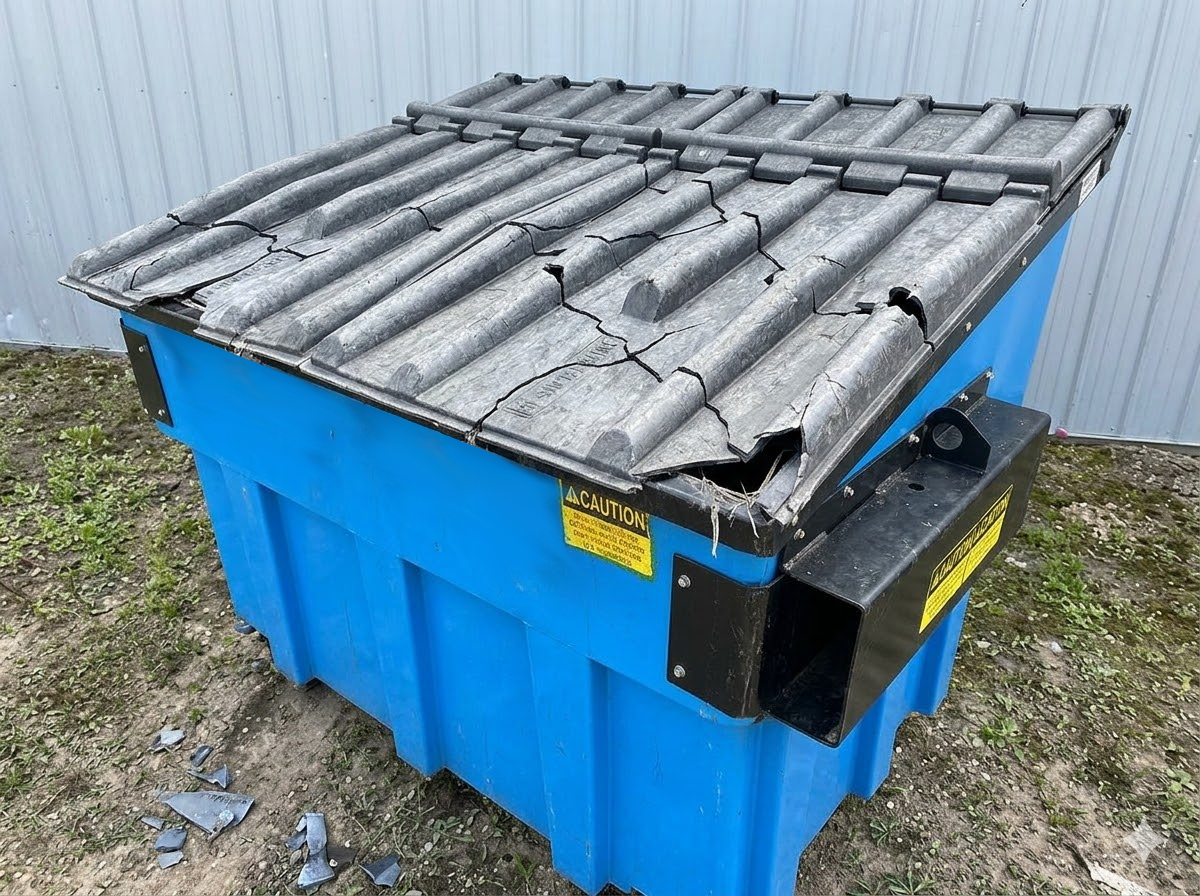
Dumpster lids are essential for keeping waste contained, controlling odors, and preventing pests. However, over time, these lids can become damaged or break entirely, leading to costly repairs or replacements. Understanding the common causes of dumpster lid failure is key to extending their lifespan and maintaining a clean, safe environment. In this article, we’ll explore three primary reasons why dumpster lids break—hinge fatigue, UV damage, and cold weather cracking—and share expert tips on how to prevent these issues.
Hinge Fatigue
One of the most frequent causes of dumpster lid failure is hinge fatigue. The hinges are the moving parts that allow the lid to open and close smoothly. Over time, repeated use causes wear and tear on these components.
Why It Happens:
- Constant opening and closing put stress on the hinge pins and brackets.
- Rust and corrosion can weaken metal hinges.
- Misalignment or improper installation increases strain on hinges.
How to Prevent It:
- Regularly lubricate hinges with a suitable grease or oil to reduce friction.
- Inspect hinges periodically for signs of rust or wear and replace damaged parts promptly.
- Ensure hinges are properly aligned during installation to avoid uneven stress.
- Consider upgrading to heavy-duty or corrosion-resistant hinges if your dumpster is in a high-use or harsh environment.
UV Damage
Dumpster lids are often exposed to direct sunlight for extended periods. Ultraviolet (UV) rays from the sun can degrade materials over time, especially plastics and painted surfaces.
Why It Happens:
- UV radiation breaks down chemical bonds in plastic lids, causing brittleness and discoloration.
- Painted metal lids may experience fading, peeling, or surface cracking.
- Prolonged exposure accelerates material aging and weakens structural integrity.
How to Prevent It:
- Use lids made from UV-resistant materials such as high-density polyethylene (HDPE) with UV stabilizers.
- Apply protective coatings or UV-blocking sprays designed for outdoor plastics or metals.
- Position dumpsters in shaded areas when possible to minimize direct sun exposure.
- Cover lids with tarps during extended periods of non-use.
Cold Weather Cracking
In colder climates, dumpster lids face additional challenges due to freezing temperatures. Materials contract and become less flexible in the cold, making them more susceptible to cracking.
Why It Happens:
- Plastic lids become brittle as temperatures drop, increasing the risk of cracks from impact or stress.
- Metal lids may contract unevenly, causing warping or stress fractures.
- Ice buildup around hinges or seals can force lids open or cause damage when forced shut.
How to Prevent It:
- Choose lids made from materials rated for low-temperature durability.
- Avoid slamming lids shut in cold weather; close them gently to reduce impact stress.
- Clear ice and snow regularly from around the dumpster and lid area.Store dumpsters indoors or in sheltered locations during extreme
- cold spells if possible.
Final Thoughts
Dumpster lids endure a lot—from daily use to harsh environmental conditions. By understanding the causes of hinge fatigue, UV damage, and cold weather cracking, you can take proactive steps to protect your dumpster lids and extend their service life. Regular maintenance, choosing the right materials, and mindful usage are your best tools for preventing lid breakage. Keep your dumpsters functional and looking good with these expert tips!